Kaziranga National Park & Tiger Reserve
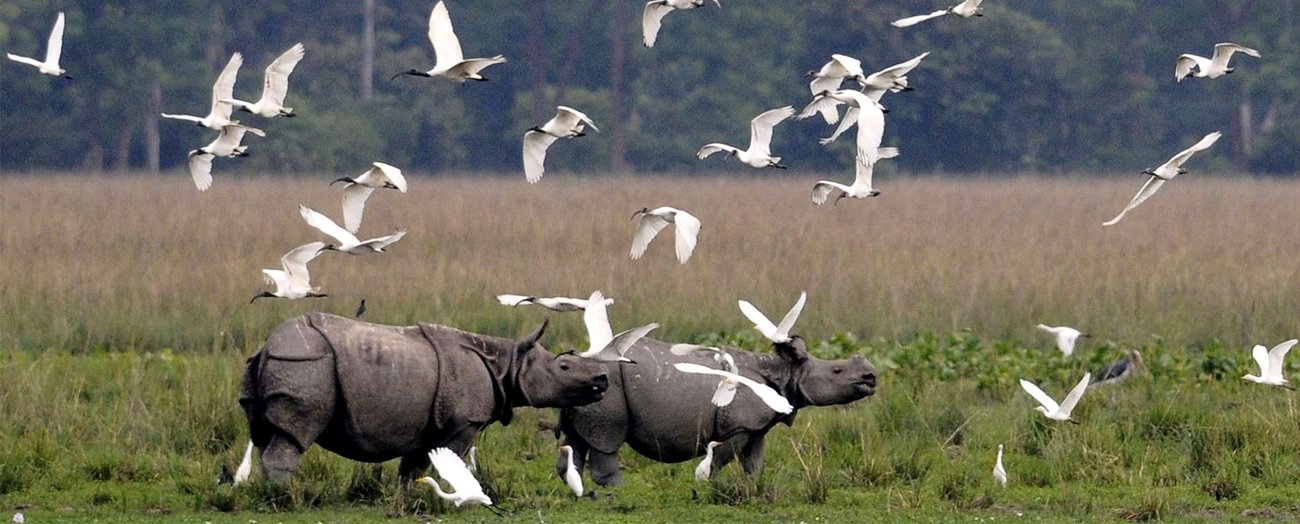
All those who thought Indian one-horned rhinoceros only existed in the Jurassic-era, then a trip to Kaziranga is a must for them. One of the most sought-after wildlife holiday destinations in India, Kaziranga National Park's 430 square kilometer area sprinkled with elephant-grass meadows, swampy lagoons, and dense forests is home to more than 2,400 Indian one-horned rhinoceros, approximately 2/3rd of their total world population.
Formed in 1908 on the recommendation of Mary Curzon, the park is located in the edge of the Eastern Himalayan biodiversity hotspots — across Golaghat and Nagaon districts of Assam. In 1985, the park was declared as a World Heritage Site by UNESCO. It is said when Mary Curzon, the wife of the Viceroy of India Lord Curzon, visited the park to see rhinos, she wasn't able to spot a single one. She persuaded her husband to take urgent measures to protect the dwindling species, leading to the creation of the Kaziranga Proposed Reserve Forest in 1905.
Flora of Kaziranga
Due to the difference in altitude between the eastern and western areas of the park, four primary types of vegetation thrive here:
- Alluvial Inundated Grasslands: Tall elephant grass (up to 5 meters) dominating the riverine flats.
- Alluvial Savanna Woodlands: Open woodlands with tall trees like Kumbhi, Indian gooseberry, and the iconic silk cotton tree (Simul).
- Tropical Moist Mixed Deciduous Forests: Rich canopy cover supporting arboreal wildlife.
- Tropical Semi-Evergreen Forests & Aquatic Flora: Dense wetlands (beels), ponds, water lilies, and water hyacinths along the Brahmaputra shores.
Fauna: The Big Five & Avifauna
Kaziranga is globally celebrated for harboring the "Big Five" mammals of the subcontinent:
- Great Indian One-Horned Rhinoceros: The crown jewel of Kaziranga with over 2,400 individuals.
- Royal Bengal Tiger: Declared a Tiger Reserve in 2006, possessing one of the highest densities of tigers in the wild.
- Asian Elephant: Large breeding herds freely roaming between the park and the Karbi Anglong hills.
- Wild Water Buffalo: Massive horn-spans grazing along swampy river corridors.
- Eastern Swamp Deer (Barasingha): Large populations thriving in grasslands.
Best Time to Visit Kaziranga
Winter (Nov to Feb)
Ideal SeasonMild, sunny, and dry weather with temperatures between 10°C and 25°C. Best time for rhinos, tigers, and thousands of migratory birds arriving from Siberia and Central Asia.
Summer (Mar to Apr)
Great SightingsPleasantly warm and dry. Grasslands are burnt for fresh shoots, offering crystal-clear visibility and frequent animal sightings congregated near the water beels.
Monsoon (May to Oct)
Park ClosedPark receives heavy rainfall (~2,220 mm) with flood warnings from the swollen Brahmaputra river. Core safari gates remain officially closed to tourists for wildlife safety.
How to Reach Kaziranga National Park
By Air
Guwahati Airport (GAU): 217 km (4.5 hrs drive). Connected to all major Indian metro cities.
Jorhat Airport (JRH): 97 km (2 hrs drive). Nearest regional airport with Kolkata flights.
By Rail
Guwahati (GHY) / Kamakhya: 200 km. Major railway hub.
Furkating Junction (FKG): 75 km.
Jorhat Railway Station: 90 km.
By Road (Car & Taxi)
Kaziranga is located on National Highway 715 (old NH-37). Smooth 4-lane expressway from Guwahati via Nagaon and Bokakhat. Book private cabs with our taxi service.